
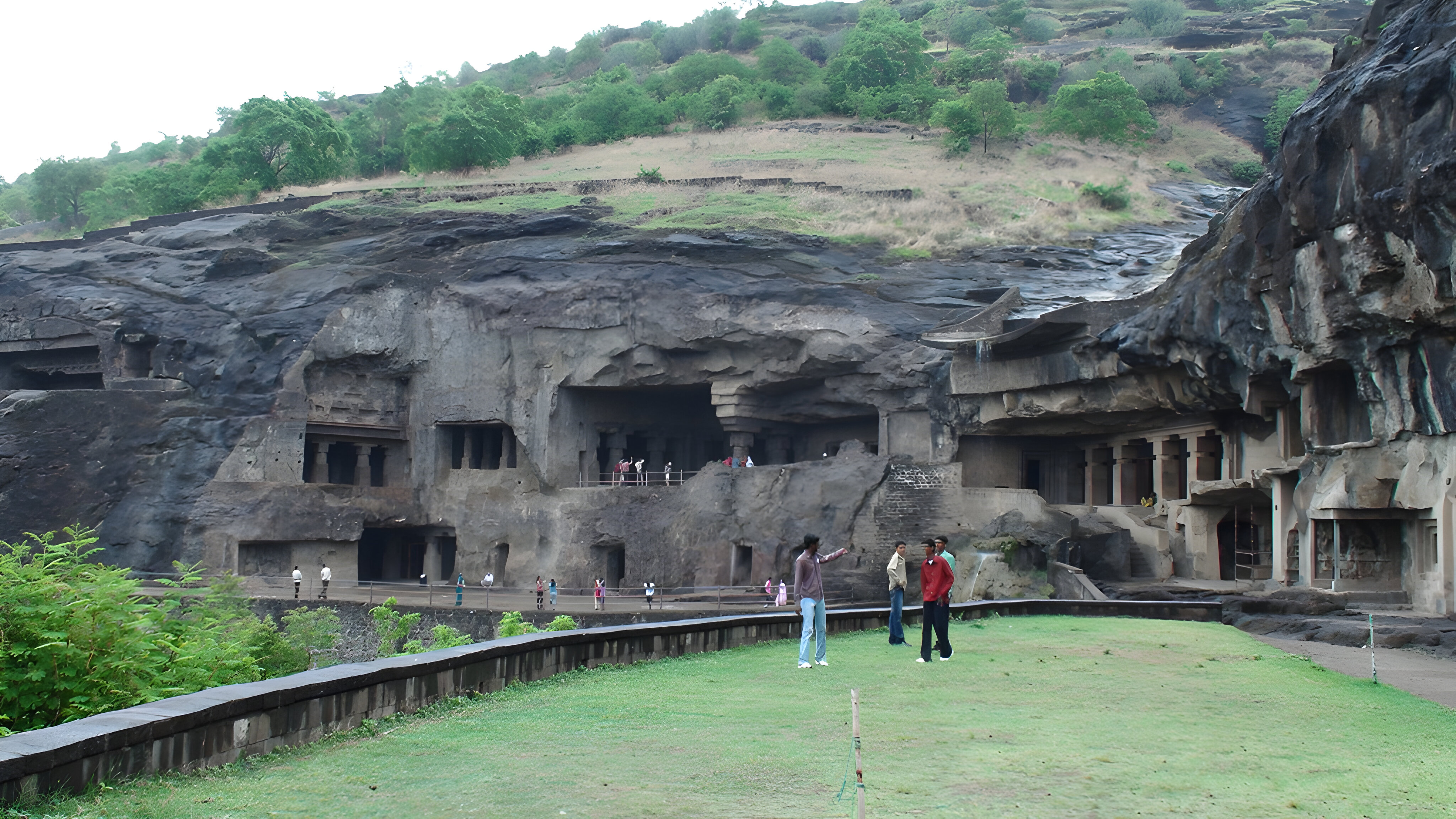
Historic Place
Ellora
Chhatrapati Sambhajinagar
Maharashtra, India.
Key Highlights
- Architectural Marvel
- Diverse cave styles
- Religious Harmony
- Artistic Treasure Trove
Open & Close time
Timing: 6:00 AM to 6:00 PMDetailed Information
Location: Ellora, Chhatrapati Sambhajinagar, Maharashtra, India
Kailash Temple:
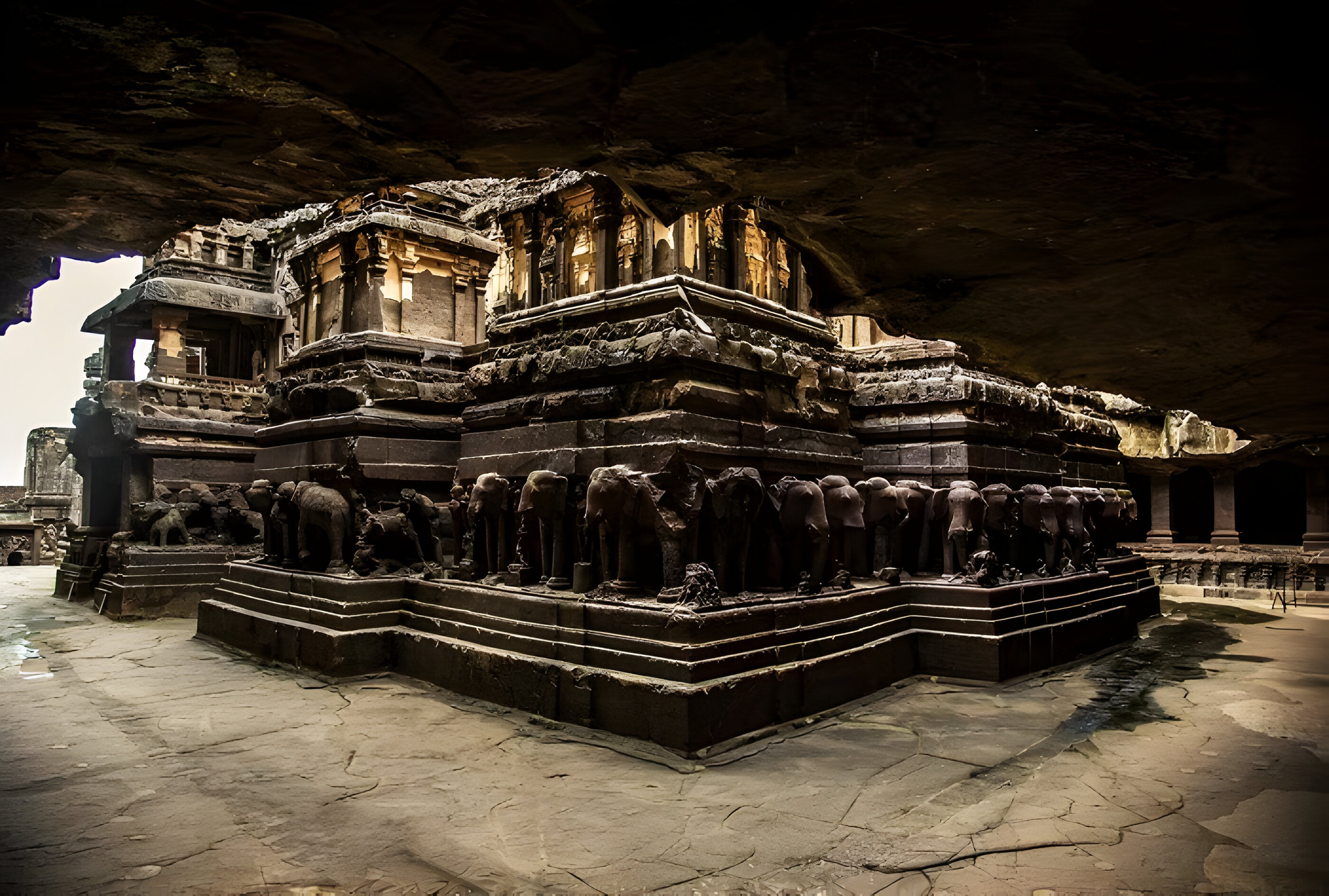
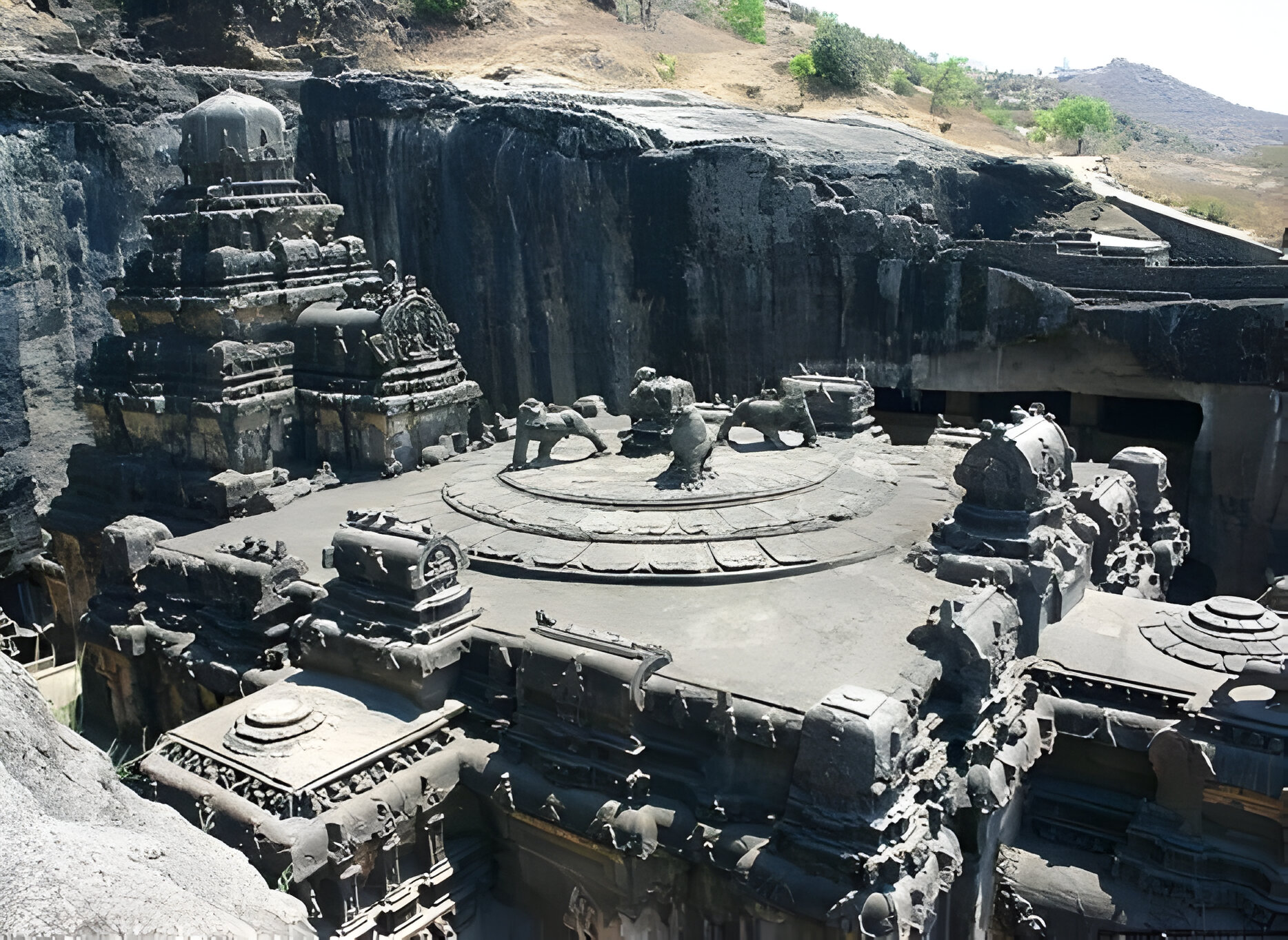
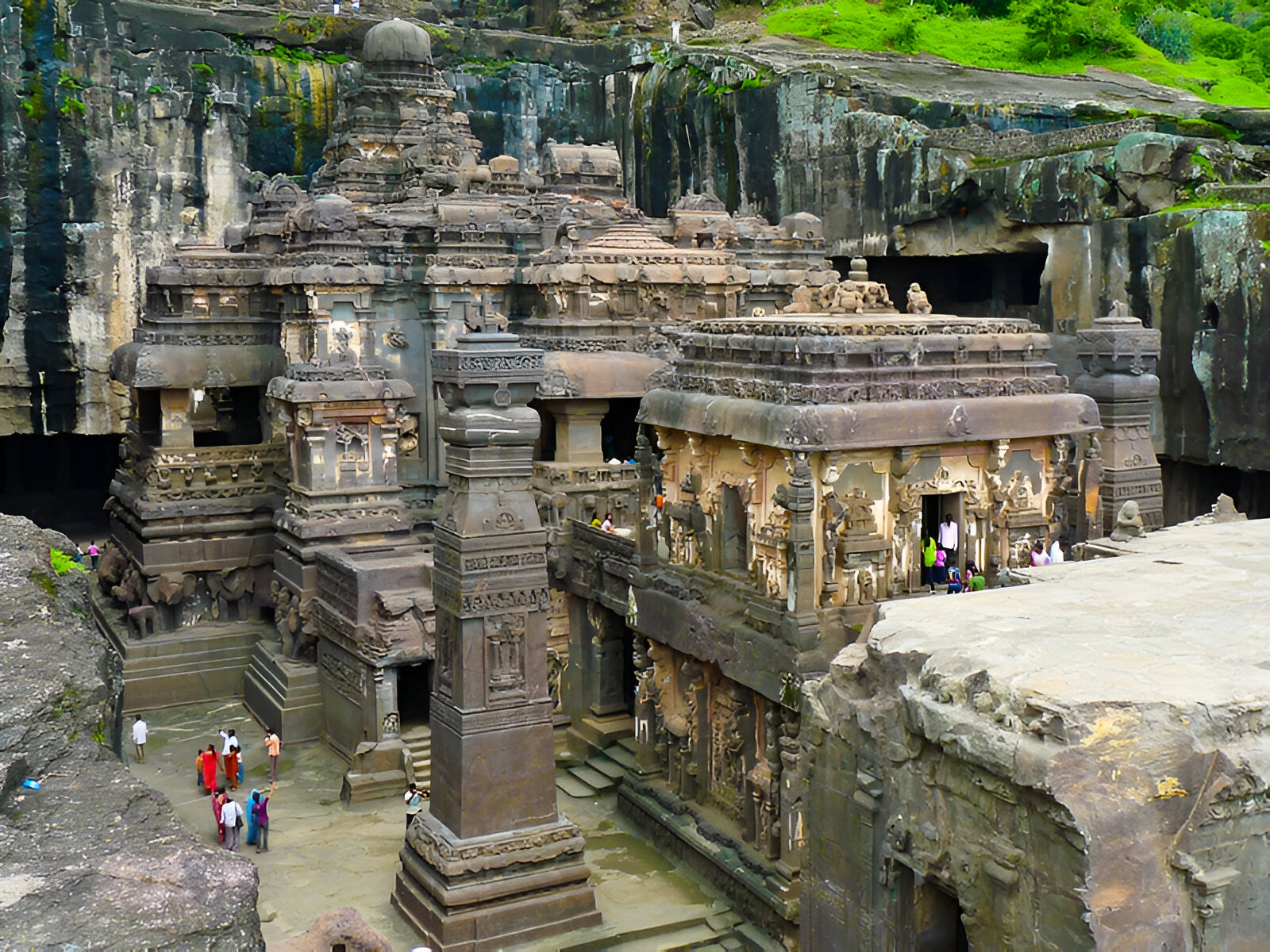
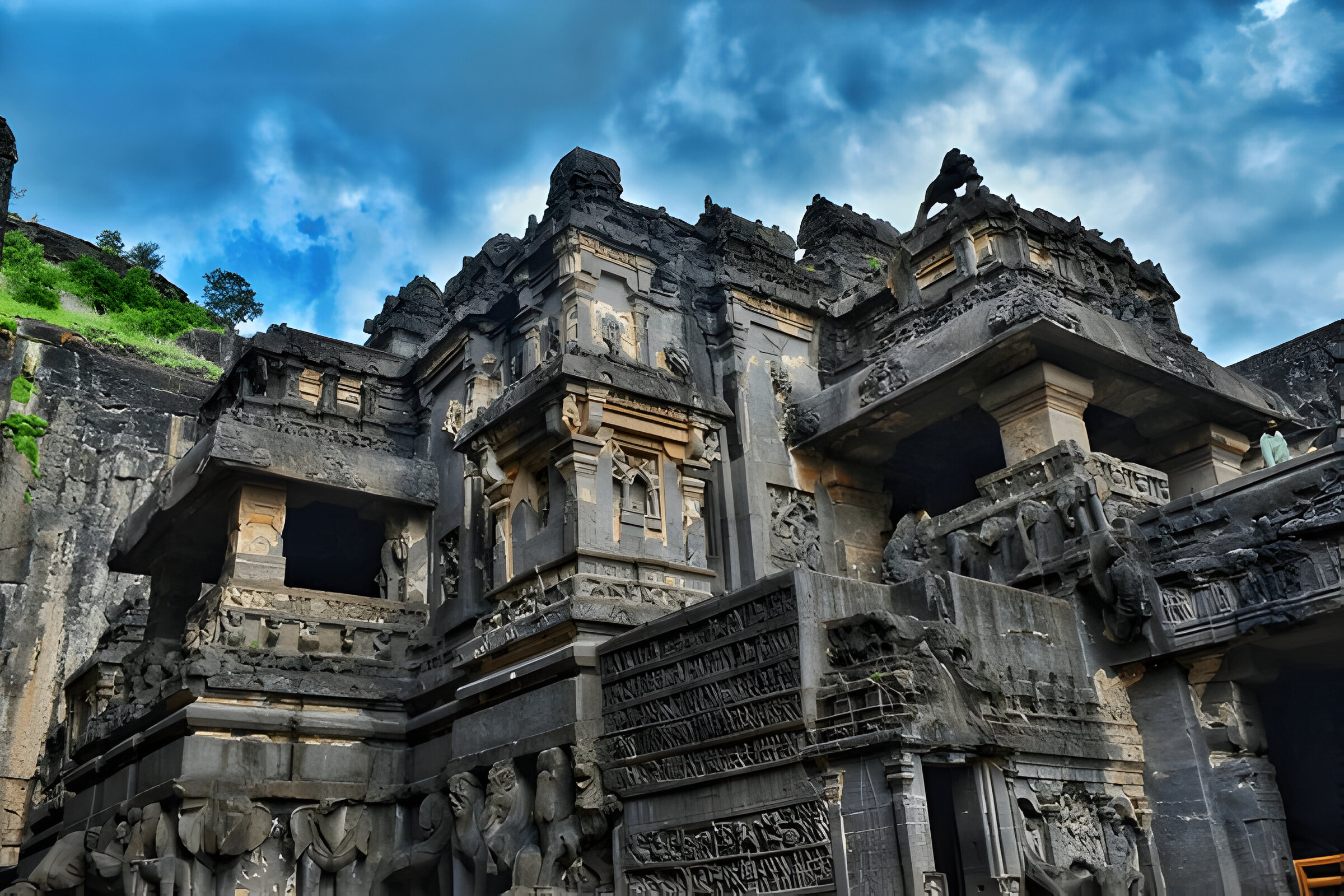
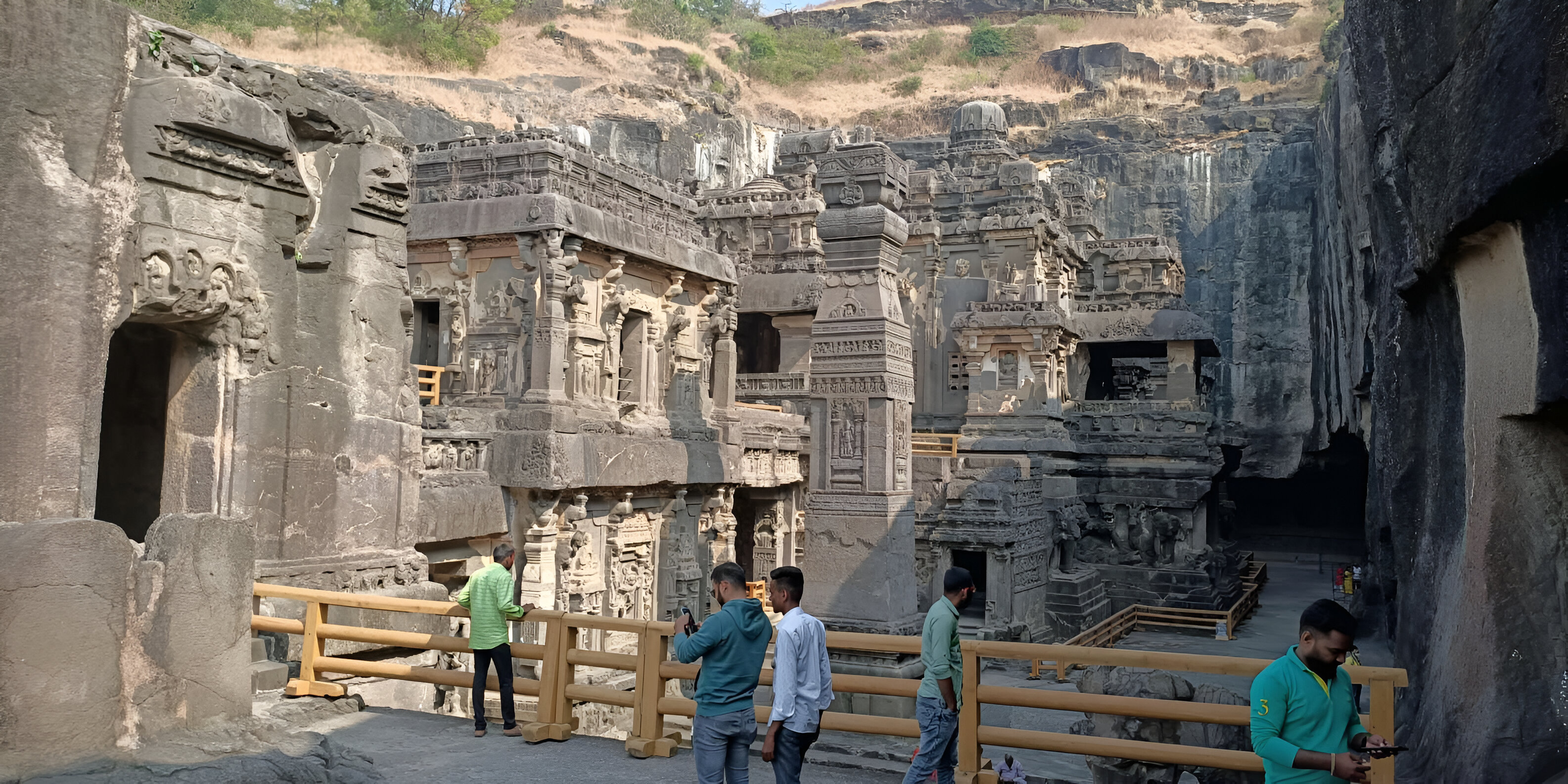
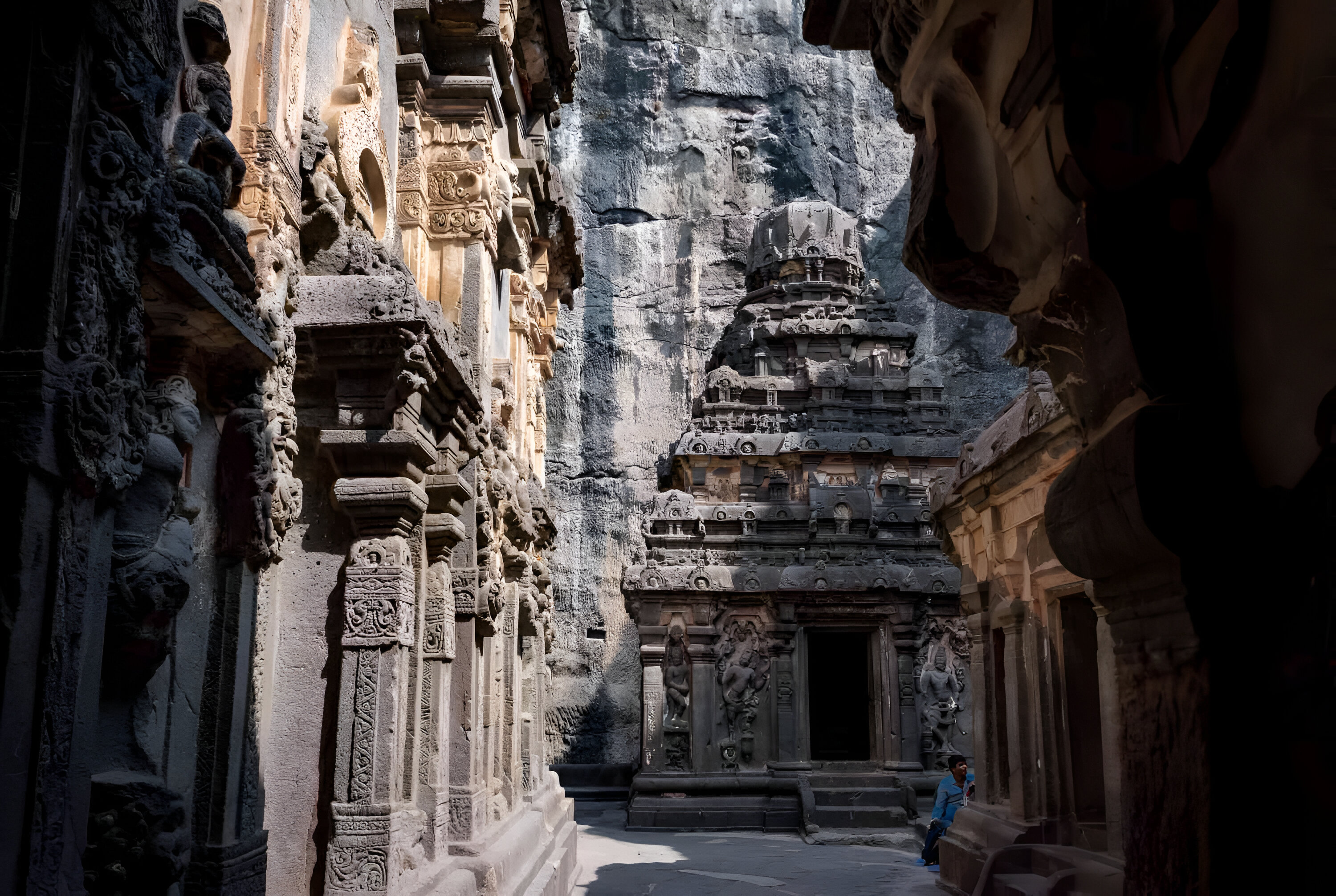
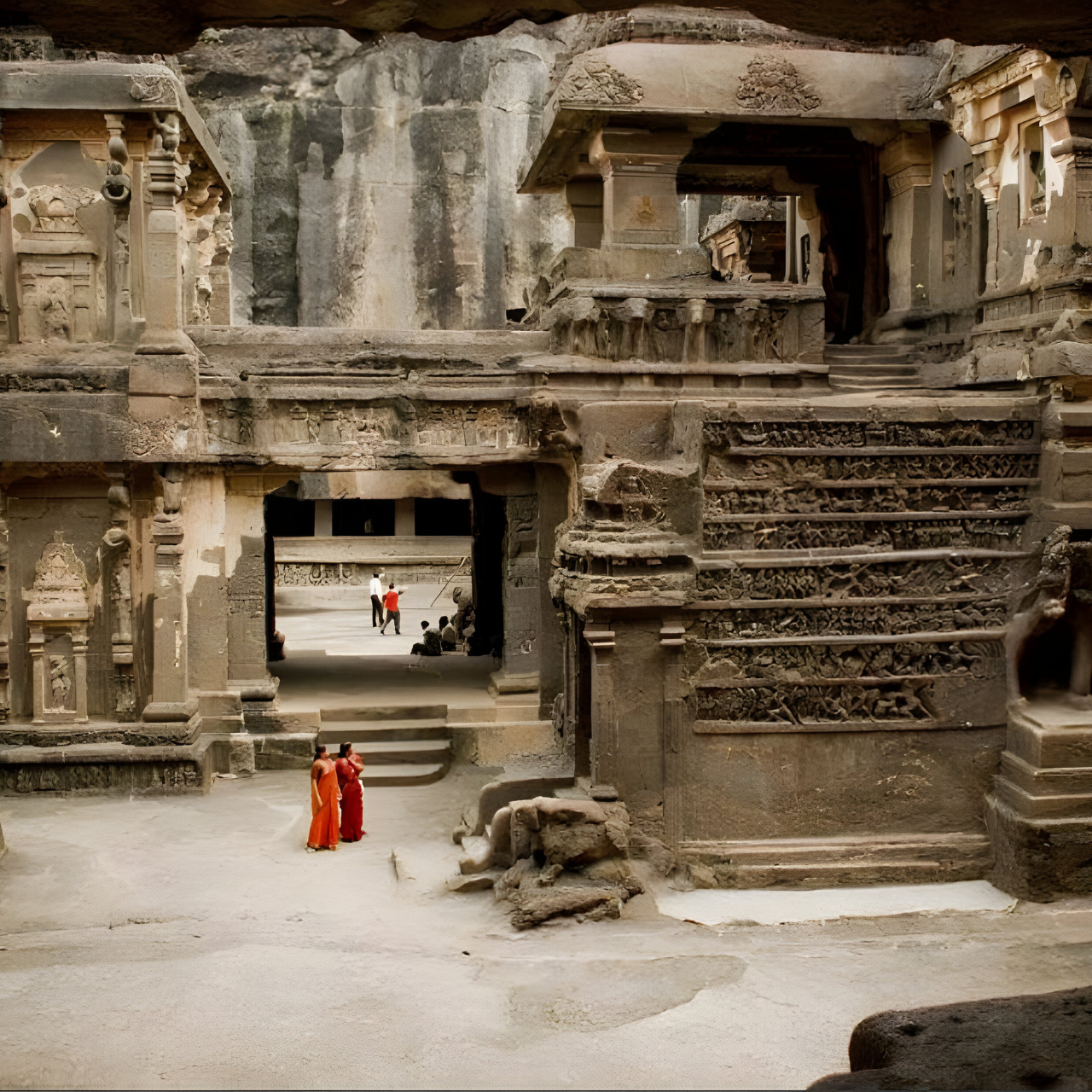
The Kailasha or Kailashanatha temple is the largest of the rock-cut Hindu temples at the Ellora Caves near Chhatrapati Sambhajinagar district of Maharashtra, India. A megalith carved from a cliff face, it is considered one of the most remarkable cave temples in the world because of its size, architecture, and sculptural treatment. It has been called "the climax of the rock-cut phase of Indian architecture". The top of the structure over the sanctuary is 32.6 metres (107 ft) above the level of the court below,] and although the rock face slopes downwards from the rear of the temple to the front, archaeologists believe it was sculpted from a single rock.History:
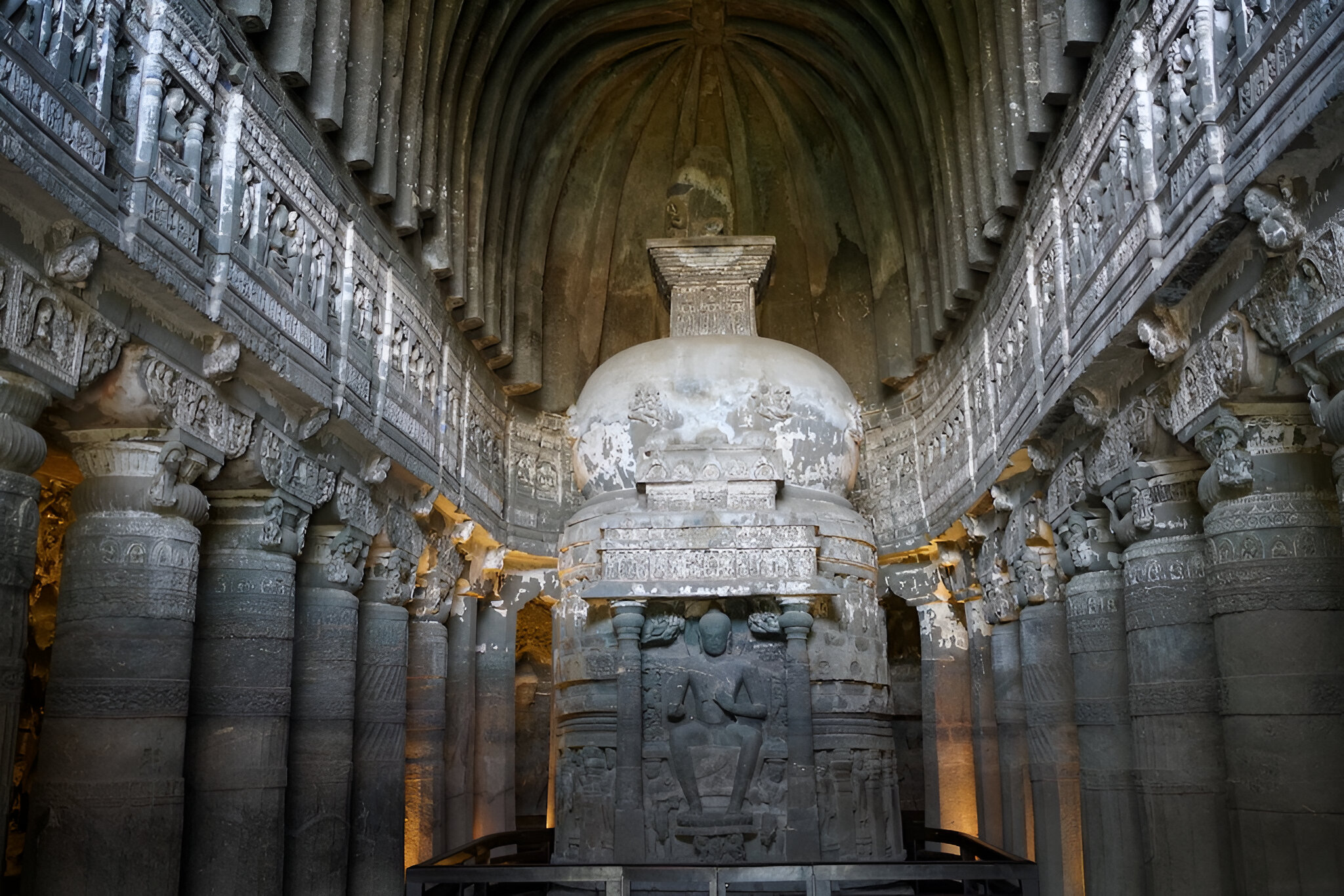
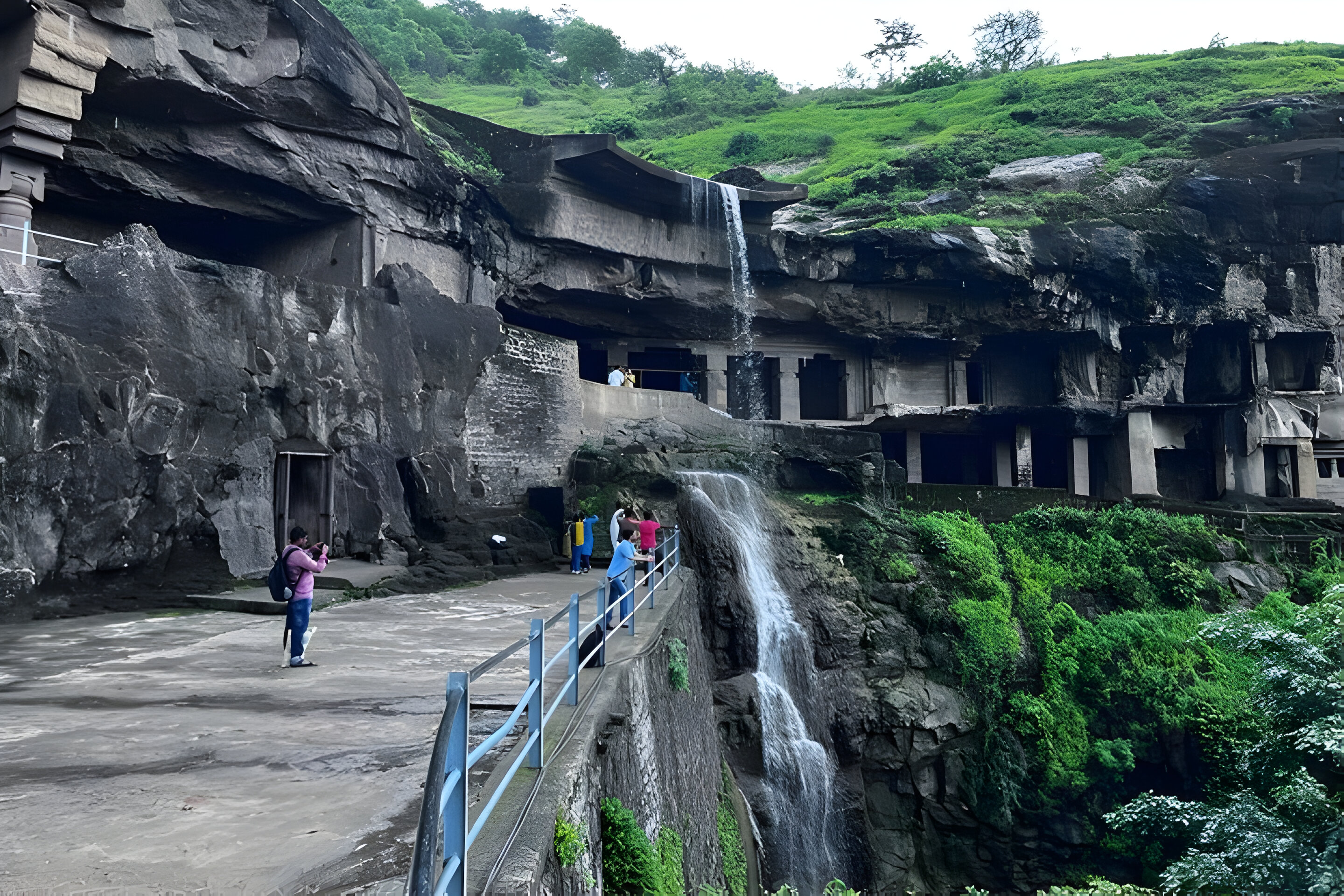
Carved from a single, colossal rock, the Kailasa Temple at Ellora stands as a monument to artistic ambition and enduring devotion. Its creation, spanning some 15 years, dates back to the 8th century, attributed to the Rashtrakuta dynasty under King Krishna I. Unlike other Ellora caves carved into the hillside, Kailasa was painstakingly excavated downwards, mimicking the mythical abode of Lord Shiva – Mount Kailash. It's not just a temple; it's a microcosm of the celestial city, with sculpted elephants guarding the entrance, towering gateways flanked by mythical figures, and elaborate panels narrating celestial stories. The temple complex boasts a magnificent courtyard, a pillared hall, sanctuaries for Shiva and Parvati, and a towering shikhara reaching towards the heavens. Despite facing some damage in later centuries, the Kailasa Temple remains a marvel of engineering and artistry, showcasing the Rashtrakutas' mastery of rock-cut architecture and their deep devotion to Lord Shiva. Its legacy continues to captivate visitors with its intricate carvings, whispered stories, and a powerful aura that transports them to another time and place.Built during 600 to 1000 CE, Ellora Caves lie in the Sahyadri hills in Chhatrapati Sambhajinagar and is a 2-hour drive from the Ajanta Caves. The Ellora Caves comprise Hindu, Buddhist and Jain temples and over a 100 caves with only 34 open to the public excavated from the basalt cliffs in the Charanandari hills. Ellora Caves served as lodgings to the travelling Buddhist and Jain monks besides being a site for the trade route. There are 17 Hindu caves, 12 Buddhist and five Jain caves with deities, carvings and even monasteries depicting the mythology of each religion. These caves constructed near each other stand for the harmony and solidarity among all faiths and beliefs.
A part of the Hindu and Buddhist Caves were built during the Rashtrakuta dynasty, and the Jain Caves were built by the Yadav dynasty. It is not yet established as to which caves were built first - the Hindu or the Buddhist. Based on the archaeological evidence found at various sites it was deduced that there were essentially three major construction periods for the Ellora caves: early Hindu period from 550 to 600 CE, Buddhist period from 600 to 730 CE, and the final phase, the Jain and Hindu period lasting from 730 to 950 CE.
Significance:
Ellora Caves rise above mere artistic wonder and plunge into the depths of India's soul. They're a tapestry woven with the threads of three religions, where Buddhist serenity meets Hindu grandeur and Jain precision, all carved from the living rock. This peaceful coexistence whispers tales of tolerance, while intricate sculptures and grand architectures chart the evolution of faith and artistic mastery. Ellora is a time machine, transporting us to ancient India, offering a glimpse into royal patronage, everyday life, and the divine through its captivating stories etched in stone. UNESCO's recognition underlines its global significance, while the echoing chants of pilgrims at the Grishneshwar Temple remind us that this legacy pulsates with life even today. Ellora is more than just a sight; it's an experience that resonates with the very spirit of India.Ellora Caves Architecture:
Although the deities and idols in the caves have been damaged, the paintings, carvings remain as it is. The inscriptions on the walls of the Ellora Caves date back to the 6th century and a famous one is the Rashtrakuta Dantidurga on the mandapa of Cave 15 inscribed during 753 to 757 AD. Out of all the excavations done, Cave 16 or Kailasha temple - a monument dedicated to Shiva is the largest single monolithic rock excavated in the world. It was built during 757-783 AD by Krishna I who was the uncle of Dantidurga.Caves:
The Ellora caves are situated in state of Maharashtra about 29 kilometres (18 miles) northwest of the city of Sambhaji Nagar, 300 kilometres (190 miles) east-northeast of Mumbai, 235 kilometres (146 miles) from Pune and about 100 kilometres (62 miles) west of the Ajanta Caves, 2.3 kilometres (1.42 miles) from Grishneshwar Temple.A whiff of the antiquated mystery sits heavy in the air on the 2 km long stretch of what must have been an arduous task of carving these magnificent caves out of rocks. One of the largest ancient rock-cut cave temples in the world, Ellora Caves are a UNESCO World Heritage Site. A confluence of ideas and shared creative intensities gave shape to one of the most stupendous works of art in the ancient India.
Entry Fees:
- Indians and SAARC/BIMSTEC nationals: ₹40 per person- Foreigners: ₹600 per person
- Children below 5 years: Free entry
Best time to visit:
Ellora Caves are closed on Tuesdays. The caves can be visited during rest of the week. The best time to visit Ellora Caves is during November to March.
Nearby hotels to rest and dine in:
Hotels:- Hotel Kailash
- Hotel Kailas Darshan
- MTDC Tourist Resort Ellora
- Ellora Heritage Hotel
- Sun N Sand Regency
- The Ashok Ellora
Restaurants:
- Kailash Hotel Restaurant
- Hotel Kailas Darshan Restaurant
- Baba Cha Dhaba
- MTDC Resort Restaurant
Travelling options:
Situated almost 27 km from Chhatrapati Sambhajinagar city, Ellora Caves can be reached easily via buses and taxis. There are private taxi stands in Chhatrapati Sambhajinagar which offer a trip to the caves and back starting at Rs 1,000 depending on the car type. The drive will take you around an hour to reach the caves. The Maharashtra State Road Transport Corporation (MSRTC) operates bus tours to Ellora Caves in AC Volvo coaches. The guided tour buses depart the Central Bus Stand in Chhatrapati Sambhajinagar in the morning and cover other attractions on the route. Alternatively, you can go for the regular state-run buses.- Nearest Bus Stand to Ellora Caves
- Central Bus Stand in Chhatrapati Sambhajinagar is 27 km from the Ellora Caves.
- Nearest Railway Station to Ellora Caves
- Sambhajinagar Railway Station is 28 km from the Ellora Caves. The following are a few trains running to Chhatrapati Sambhajinagar: Sachkhand Express 12716, Tapovan Express 17617, Ajanta express 17063.
- Nearest Airport to Ellora Caves
- Sambhajinagar Airport is 35 km from the Ellora Caves. It connects Mumbai, Delhi and Hyderabad.
Additional tips:
- Hydrate & shade it: Sun scorches, water soothes. Pack enough and seek shade during midday peak.- Shoes with grip: Climbs and uneven paths await. Sturdy footwear enhances your temple treks.
- Silent awe: Whispers echo in halls divine. Respect the tranquility, let stories unfold in time.
- Guide's hidden gems: Unravel history's whispers. A guided tour reveals secrets etched in ancient sculptures.
- Sunset panoramas: Paint the twilight sky with wonder. Ascend Kailasa's steps, watch the sun embrace the yonder.